Synthetic vs Natural Dye: Which Is Better for the Environment?

What are synthetic dyes?
Synthetic dyes are a class of chemical compounds that are applied in several industries, ranging from textiles to food. The color is derived from complex organic structures with chromophore groups and auxochromic groups, which increase solubility, enhance affinity to the substrate, and are electrochemically oxidizable/reducible. Due to the high demand for synthetic dyes, the industry is expected to reach $15 billion by 2026. While synthetic dyes provide convenience with their ease of use, wide range of colors, and fastness, they come with detrimental effects.

The downsides of synthetic dyes
One of the most prominent issues relating to synthetic dyes is their loss rate throughout the manufacturing process. Around 10-15% is lost, and often these dyes end up in waterways like rivers, lakes, etc. Due to its toxicity, when it enters the food chain, it can have adverse effects not only on the natural environment but also on the neighboring communities residing near textile factories. Textile dyeing is the second-largest contributor to water pollution, accounting for around 20%.

Synthetic dye polluting a river Some specific examples are…
Disrupts the balance of aquatic life, leading to the death of fish.
It can affect the growth of fish due to dyes absorbing and reflecting sunlight when they enter water.

Dead fish
Runoff can end up in drinking and agricultural water for local communities, which results in chemicals ending up in the human body. These chemicals can stay in our bodies for years.
Synthetic dyes from clothing can also have negative effects them leading to skin irritation, allergic reactions, and even respiratory issues

All the possible effects of dyes in our bodies
Advantages of synthetic dyes | Disadvantages of synthetic dyes |
|
|
What are Natural Dyes?
Unlike synthetic dyes, which are chemically formulated, natural dyes come from flowers, berries, roots, fungi, etc, and often yield earthy tones similar to browns. Essentially, they are colors that are extracted from natural resources like minerals and ores. These dyes have a long history, with evidence of natural dyes being found even in the neolithic era.
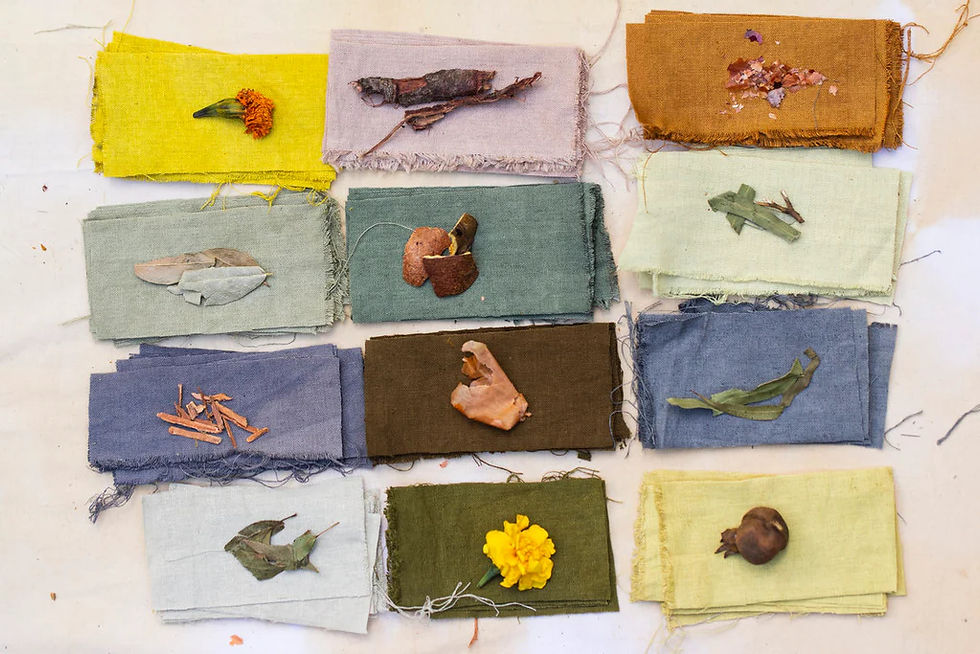
Here's a list of a couple of natural dyes, colors, and parts used!
Acacia catechu - Maroon& Brown Wood - Extract
Artocarpus integrifolia - Yellow - Sawdust
Bixa Orellana - Orange - Seed
Diospyros peregrina - Pink - Fruit
Ceriops roxburghiana - Salmon Pink - Bark
Tagetes patula - Yellow - Petals

Dye extraction process
The benefits

Not only are they less costly, but synthetic dyes are more sustainable and better for the environment as they are less likely to pollute or potentially leach toxic chemicals to the surrounding environment.
The Downsides

While natural dyes have many benefits, it is crucial to consider the adverse properties.
Like synthetic dyes, if natural dyes are used/processed wrong, they can also have harmful effects on human health as they are placed in different contexts where their original function is altered.
They are also less prone to adhering to clothing, which often requires the use of mordants. However, these mordants are often metals that can also be toxic to the environment. This means that if mordants aren’t used, the dye will often end up fading from the fabric; however, if they are used, then the use of mordants can have negative impacts on the environment.
Advantages of natural dyes | Disadvantages of natural dyes |
|
|
Conclusion
Overall, like most cases in life, natural dyes have benefits, but can also have downsides. While on the internet or at first glance, natural dyes might seem like an easy solution to the much more toxic and harmful chemical dyes, there are factors that make it less environmentally friendly than it might seem at first glance. However, this is not a post swaying people from utilizing natural dyes because they are still, in my opinion, better than chemical dyes. I personally can’t wait to try utilizing natural dyes on my own and am excited for future advancements in this field.

Thanks for joining me in my post today, and see you next time!
Sources
Image Sources (in chronological order)



Comments